The Hidden Variable in Grant Wins: A Well-Cared-For Brain
Jun 24, 2026
Key Takeaways
- Your brain is a primary tool of your trade — it performs best when it's cared for, not depleted.
- Self-care for grant professionals isn't indulgent; it's how you protect clarity, boundaries, and long-term stamina.
- Focused work sprints (60–90 min) outperform marathon sessions for proposal quality.
- Defining "done" before you start is one of the most effective antidotes to perfectionism.
- Pre-written boundary sentences help you protect your capacity without damaging relationships.
- Daily "no input" windows — even 30 minutes — restore the attention grant work demands.
- You can control preparation, narrative quality, and professionalism. You cannot control reviewer preferences or funder strategy. Rejections aren't always a reflection of your work.
- Naming tradeoffs (time vs. quality, scope vs. capacity) keeps client relationships collaborative, not adversarial.
Grant work is high-stakes work. Deadlines are real, outcomes can feel personal, and the people we serve are often carrying urgent needs. That mix can make it easy to treat self-care like an optional extra, as if it’s just something we’ll get to after the application is submitted, the report is filed, and the next request is handled.
Dear ones - I implore you! Please don’t let yourself learn the hard way (like me): your brain is a primary tool of the trade. And like any tool, it works best when it’s cared for.
A place that helps me write (and win)
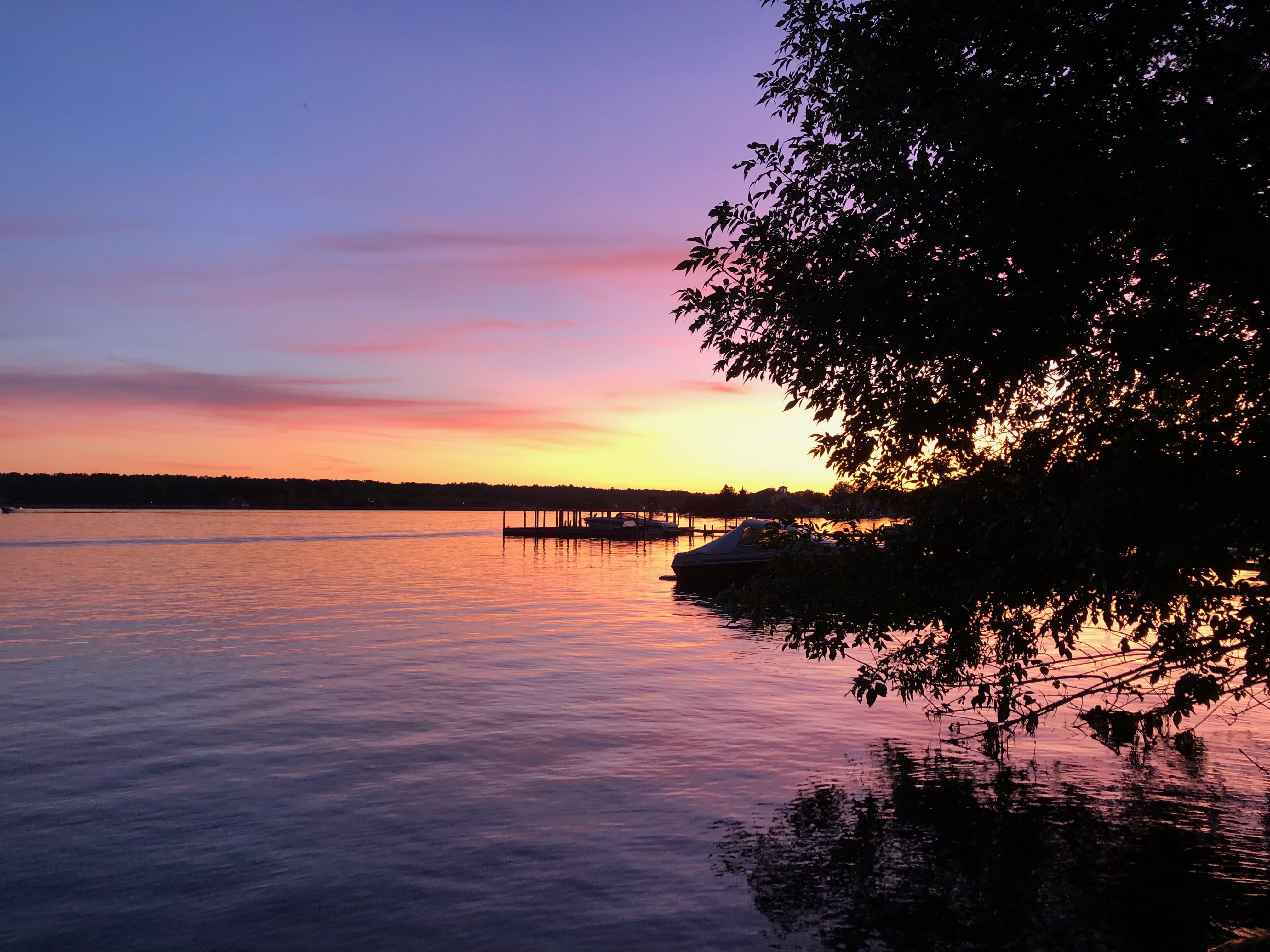
One of my favorite reminders of this is the Les Cheneaux Islands in Michigan’s U.P. There’s something about being near the water, stepping outside between paragraphs, and letting my nervous system settle into a slower rhythm.
I’ve literally done some of my best writing from this place, drafting and refining applications that later went on to win substantial funding for my clients. Not because the Les Cheneaux area is magic (though it kind of is!), but because the environment helps me do what grant writing demands: think clearly, connect ideas, and tell a compelling story with precision.
If you have a “Les Cheneaux” place like your porch, a library corner, a quiet coffee shop, a park bench, don’t feel guilty for using it. It’s not avoidance. It’s maintenance.
Why self-care matters specifically in grant work
Grant writing and nonprofit development ask us to hold a lot at once:
- Big mission, limited resources
- Multiple stakeholders with different priorities
- Tight deadlines and long review timelines
- A constant need to be both creative and compliant
That mental load can quietly push us toward overwork, people-pleasing, and perfectionism.
Self-care, in this context, isn’t just bubble baths. It’s how we protect our clarity, boundaries, and stamina – so our work stays sharp and sustainable.
Practical self-care that actually fits a grant professional’s life
1) Create “quality time” blocks, not endless hours
A strong proposal rarely comes from 10 straight hours at the keyboard. More often, it comes from focused blocks of work paired with real recovery.
Try:
- 60–90 minute writing sprints
- A 10 minute reset break (walk, stretch, water, outside)
- A quick end-of-sprint note: What’s next? so you re-enter easily later
2) Define “done” before you start
Perfectionism loves vague goals. Before you dive in, set a clear definition of completion:
- “A solid first draft that hits all RFP sections”
- “A budget narrative that matches the line items and tells the story”
- “A review-ready draft that is 90% there, with placeholders flagged”
When you know what done looks like, you spend less energy chasing an imaginary “perfect.”
3) Build a boundary sentence you can reuse
Unrealistic expectations often show up as urgency, last-minute changes, or the assumption that you can “just squeeze it in.” A pre-written sentence keeps you from having to invent boundaries while stressed.
Examples:
- “I can do X by Friday; if you need Y as well, we’ll need to move the deadline or adjust scope.”
- “To keep quality high, I need 48 hours for revisions after I receive the final inputs.”
- “I can’t promise a same-day turnaround, but I can prioritize this for tomorrow morning.”
4) Protect a “no input” window
Grant work is input-heavy: guidelines, data, edits, feedback, meetings.
Even 30 minutes a day with no new information – no emails, no RFP reading, no Slack – can restore attention.
Use it for:
- Writing
- Light planning
- Quiet thinking (the underrated part of good strategy)
5) Keep your self-expectations aligned with what you control
You can control:
- Preparation, clarity, and compliance
- The strength of the narrative and alignment with priorities
- The professionalism of submission and follow-up
You cannot control:
- Reviewer preferences
- Competitive volume
- Shifting funder strategy
- Politics inside or outside the organization
A rejection is not always a reflection of your work – or your worth.
When others’ expectations are unrealistic (and you still want to be helpful)
Many nonprofit leaders are carrying pressure from boards, communities, and budgets. Sometimes that pressure rolls downhill onto the grant professional.
You can be compassionate and boundaried by naming tradeoffs:
- Time vs. quality: “If we need it by tomorrow, it will be a basic draft. If we want it competitive, I need until Monday.”
- Scope vs. capacity: “I can write the narrative, but I’ll need you to assign someone to gather outcomes data and financials by Thursday.”
- Speed vs. strategy: “We can submit quickly, but taking 2 extra days will let us strengthen alignment and evaluation measures.”
This keeps the relationship collaborative instead of adversarial – and it keeps you out of the role of “human emergency button.”
A closing reminder
The work you do matters. And the way you do it - steady, grounded, sustainable - matters too.
So yes: take the walk. Step outside. Work from the place that helps you breathe. Set expectations that respect your capacity. Protect your brain.
Please hear this: Over the course of my career, I’ve been on the wrong side of this advice too many times to count, and I’ve paid for it dearly with my mental, emotional and physical health.
Because sometimes the hidden variable in a grant win isn’t just the logic model or the budget narrative.
It’s a well‑cared‑for mind doing excellent work, one focused paragraph at a time.